Randomly
2026 | OIL ON LINEN | 150 x 100 cm

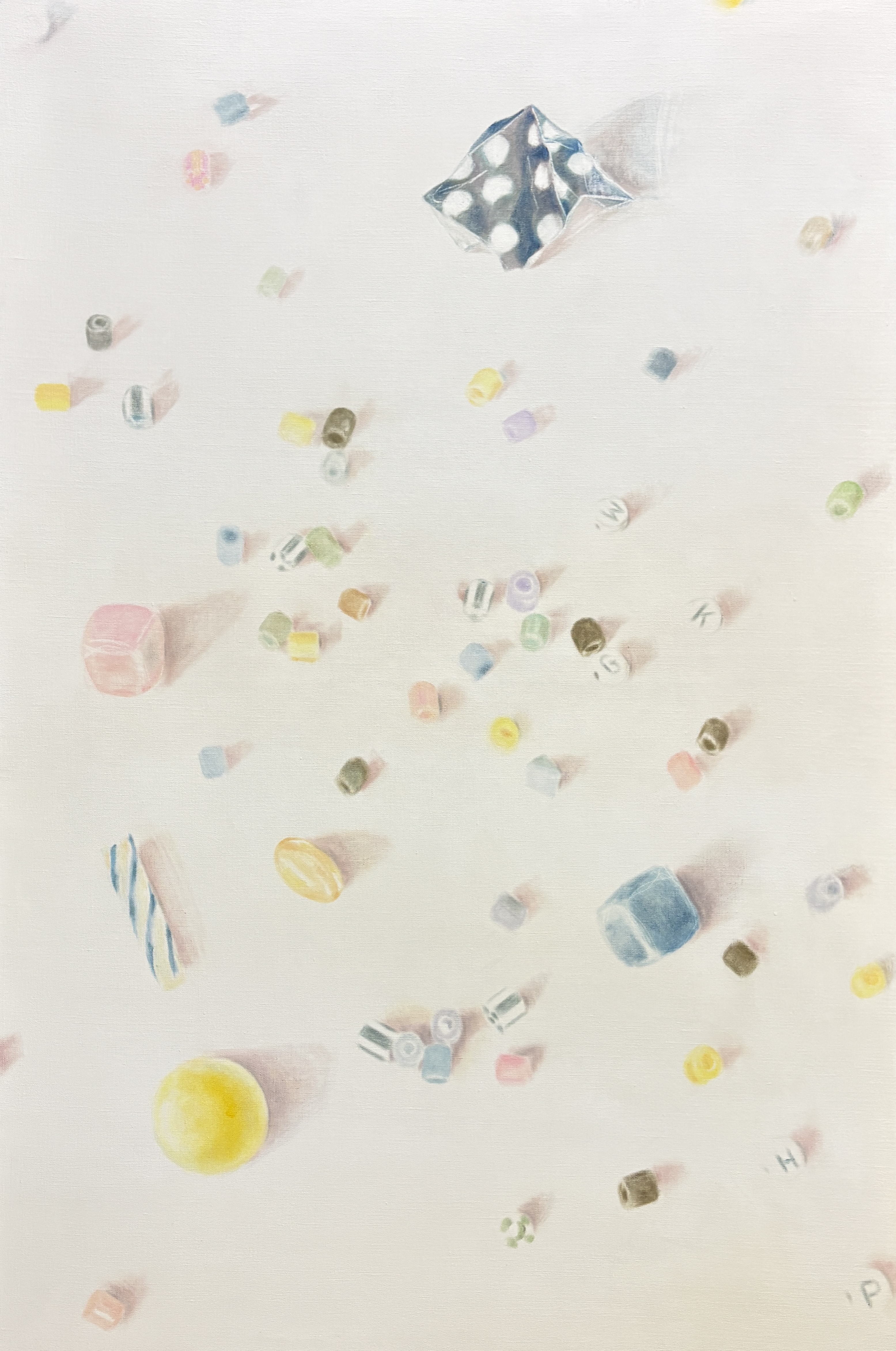
Randomly is a 2026 oil painting on linen by Yuliya Vladkovska depicting a Rubik’s Cube among alphabet beads, striped cylindrical beads and small coloured bead forms across a pale, open field.
A Rubik’s Cube sits among scattered letters and beads, bringing together objects associated with play, handling, arrangement and repetition.
The cube carries an immediate association with order, problem-solving and the possibility of resolution, yet it appears surrounded by elements that resist any obvious sequence. Alphabet beads suggest language without forming a stable message, while striped and coloured forms remain tactile, decorative and unresolved.
The body is absent, but implied through touch and manipulation: these are objects designed to be held, turned, threaded, arranged or carried. Across the pale field, their spacing creates a quiet sense of suspension, as though an activity has paused and its logic has been left incomplete.
Rather than presenting a puzzle to be solved, the painting holds together chance and structure, recognition and uncertainty. Meaning remains available, but never fully fixed.
2026 | Oil on linen | 150 x 100 cm
Yuliya Vladkovska, Randomly, 2026. Oil on linen, 150 × 100 cm. Rubik’s Cube among alphabet beads, striped cylindrical beads and coloured bead forms.

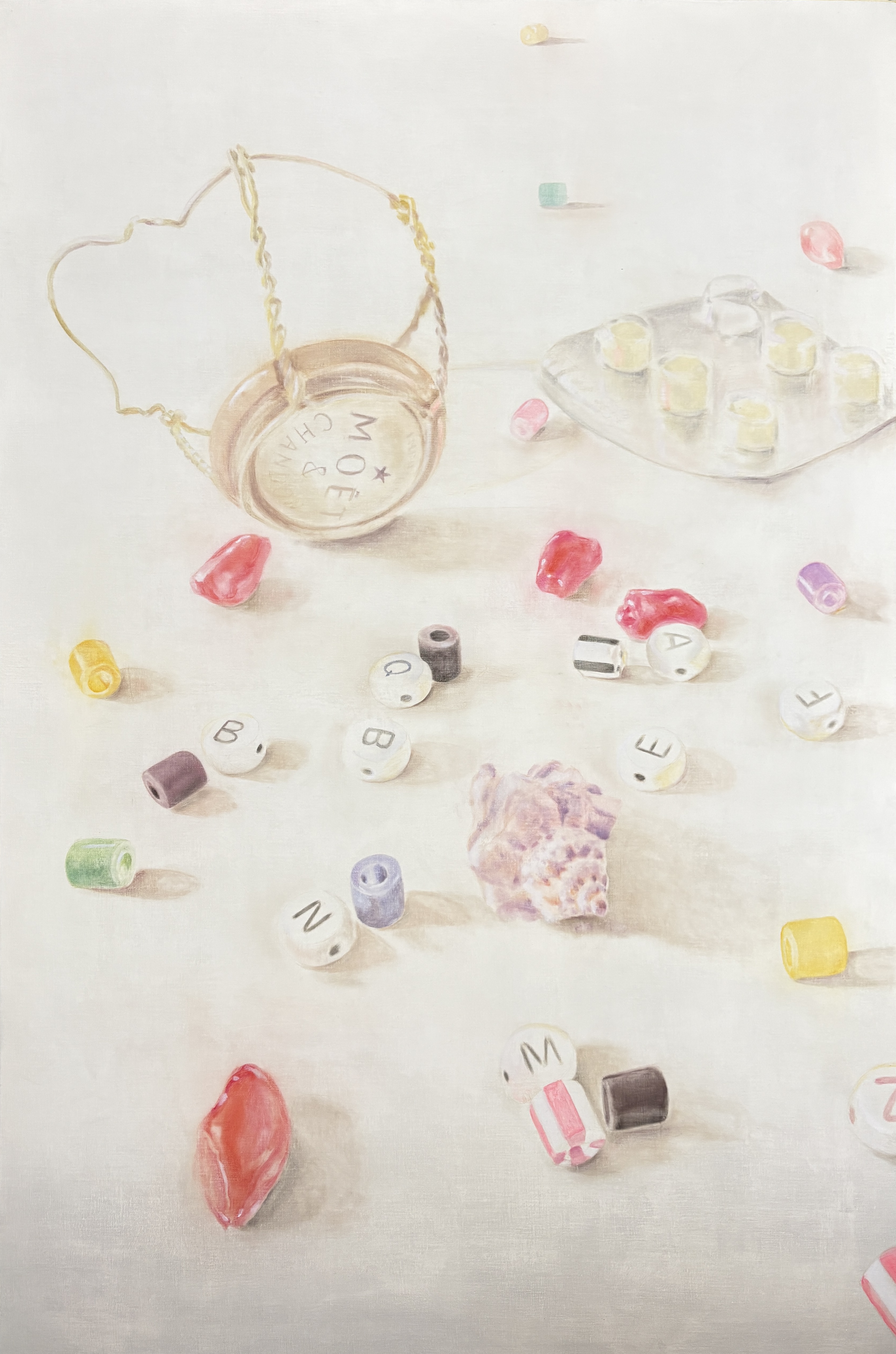
Detail of Randomly by Yuliya Vladkovska, showing alphabet beads with orange and green cylindrical bead forms and their soft painted shadows.

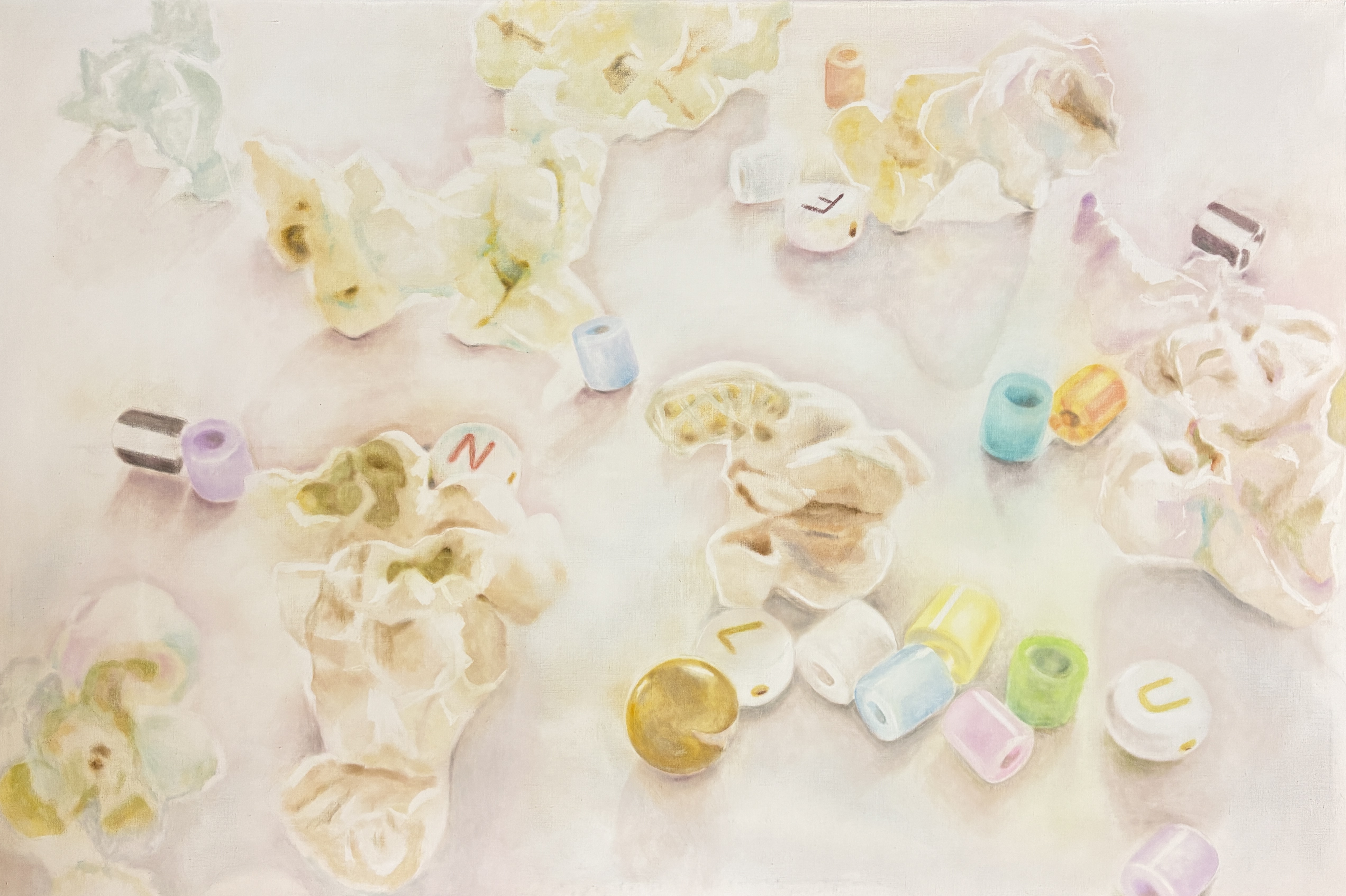
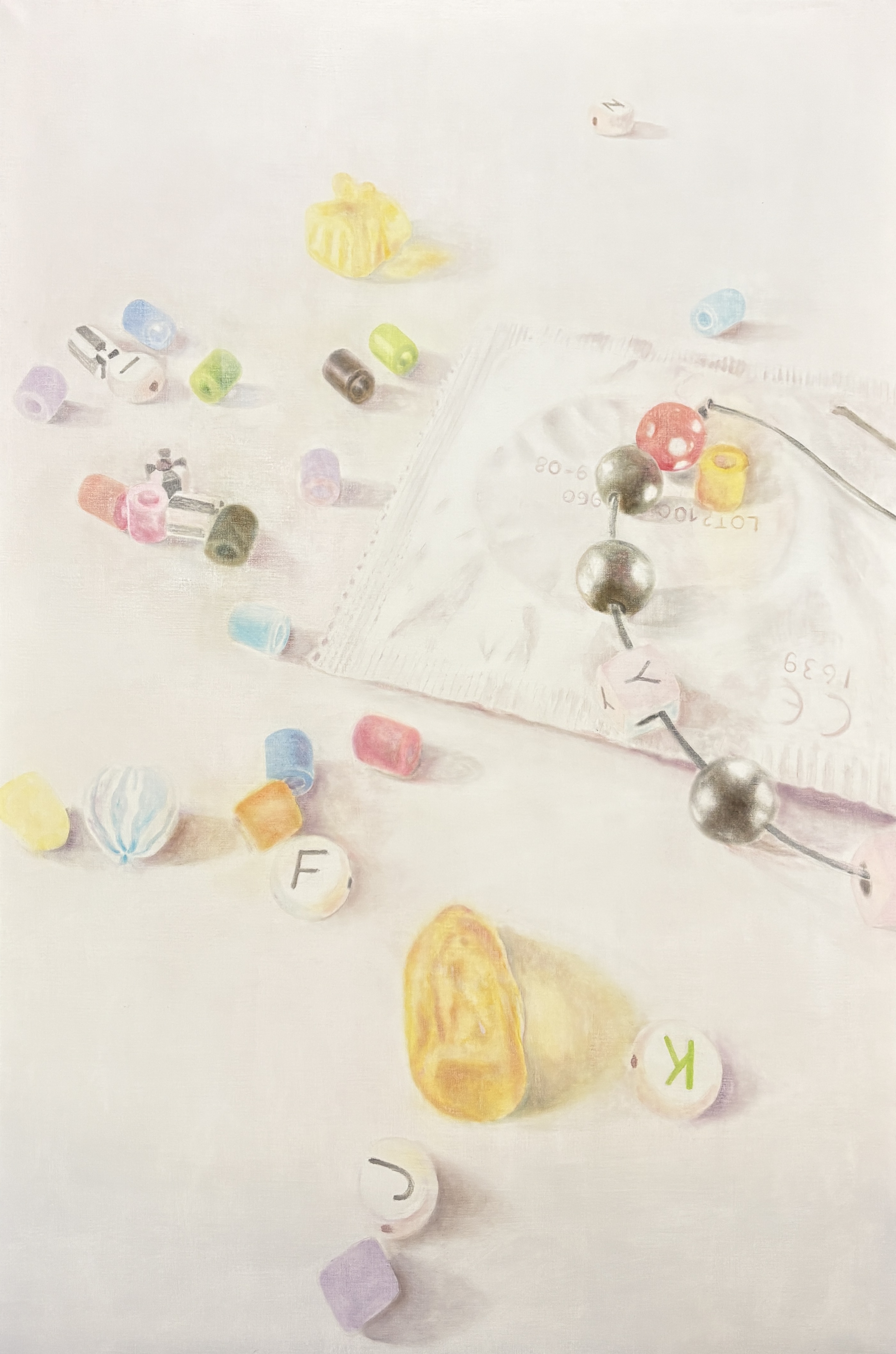
Detail of Point of Reference, showing alphabet beads, colored beads and smaller objects distributed across the open field.
Artwork Details
Depicted elements
Rubik’s Cube; alphabet beads; striped cylindrical beads; coloured cylindrical beads; translucent bead forms; small coloured cube beads.
Visual characteristics
Pale open field; central Rubik’s Cube; scattered alphabet and coloured beads; muted pastel palette; enlarged scale; soft shadows; irregular spacing; sparse vertical composition; suspended relations.
Themes & associations
Rubik’s Cube; puzzle; play; order; chance; randomness; problem-solving; touch; manipulation; childhood; memory; language; arrangement; repetition; partial structure; suspension; absence.